
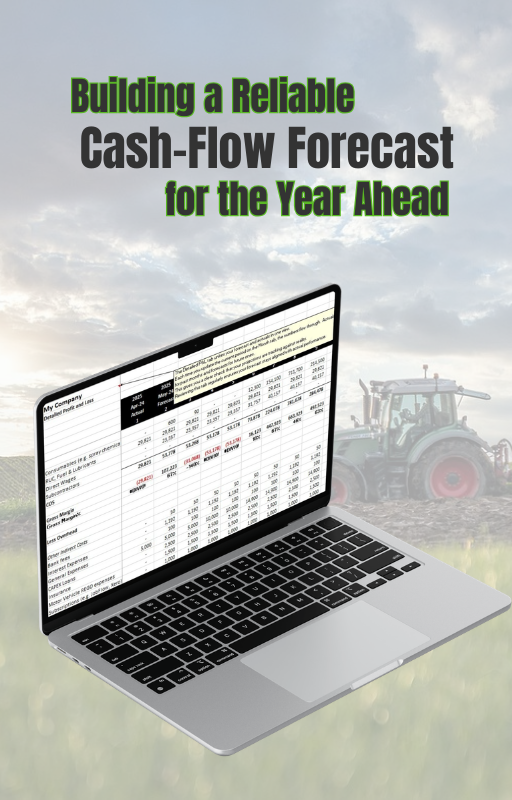
Get your Free Cash-Flow Template
Know Your Cash Position Before the Season Decides for You
No more guessing whether there will be enough cash to cover the next big expense.
No more hoping the quiet months won’t hit harder than expected.
No more scrambling when fuel, repairs, wages or machinery costs arrive before your customers have paid.
The JobFlow Cash-Flow Forecast is a simple, practical tool designed specifically for contracting businesses.
It helps you see what your cash position could look like over the next 12 months, so you can make better decisions before pressure forces your hand.
Get Your FREE Cash-Flow Forecast Template
Build a clearer picture of where your money is coming from, where it is going and when cash could get tight.
Use it yourself or work through it with your accountant.
Why We Built This
After working with agricultural and rural contractors across different regions and seasons, one thing became clear:
You can have plenty of work booked and still feel short of cash.
That’s because work completed, invoices sent and cash in the bank are three very different things.
Seasonal workloads, delayed invoicing, slow-paying customers, machinery repayments and unexpected repairs can quickly put pressure on cash flow.
Forecasting helps you see that pressure before it arrives.
But when you are busy managing crews, machines and customers, building a financial forecast is often one of those jobs that gets pushed to “later.”
And later can become expensive.
That’s why we created a practical 12-month cash-flow forecast model for contractors.
It helps you turn expected work, income and expenses into a clearer financial picture of the season ahead.
What This Cash-Flow Model Helps You Do
Plan Machinery and Investment with Confidence
Thinking about another tractor, truck, implement or piece of equipment?
Before committing, see what the purchase could do to your cash position over the months ahead.
Factor in repayments, deposits, fuel, servicing and other operating costs so you can make investment decisions based on the numbers not just how busy you expect to be.
Set Realistic Revenue Targets
Know how much work your business needs to complete and invoice to cover your costs and hit your targets.
Forecast expected contracting revenue across busy and quiet periods and see what happens when payments arrive later than expected.
Instead of simply saying “we need more work,” you can put a number behind what the business actually needs.
Prepare for Seasonal Cash-Flow Gaps
A full calendar doesn’t always mean a full bank account.
There can be a significant gap between:
Doing the work → recording the work → invoicing the customer → getting paid.
Your forecast helps identify periods where expenses may arrive faster than income, giving you time to plan ahead instead of reacting when cash gets tight.
Understand Your Real Operating Costs
Fuel.
Wages.
Repairs and maintenance.
Finance repayments.
Insurance.
Parts.
Subcontractors.
Office and administration costs.
Individually, these costs may look manageable. Together, they can quickly eat into your margins.
Putting them into one forecast gives you a much clearer picture of what it actually costs to keep your contracting business running.
Plan Staff and Resources Ahead of Time
Need another operator for the busy season?
Considering taking on permanent staff?
Your forecast can help you understand whether the business can support the additional wage cost — not only during peak season, but during the quieter months too.
That means better decisions around hiring, overtime and resource planning.
Talk to Your Accountant or Bank with Clarity
Walk into financial conversations with more than a rough idea of what is happening.
Use your forecast to show:
Expected income
Major upcoming expenses
Machinery purchases
Staffing costs
Seasonal highs and lows
Potential cash-flow gaps
That gives your accountant, bank or adviser something practical to work with and helps turn financial conversations from reactive to proactive.
Being Busy Doesn’t Automatically Mean You’re Making Money
Contractors can have machines running every day, crews flat out and months of work booked ahead while cash flow is still under pressure.
The problem is often timing.
Work gets completed but isn’t invoiced quickly.
Customers take time to pay.
Fuel, wages and machinery costs still need to be paid in the meantime.
A cash-flow forecast helps you see the gap before it becomes a problem.
Stop Guessing. Start Planning.
You can’t control the weather.
You can’t control exactly when every customer will pay.
And you can’t predict every breakdown.
But you can build a clearer picture of what is coming.
Use the JobFlow Cash-Flow Forecast to look ahead, test different scenarios and make better decisions about your contracting business.
Get Your FREE Cash-Flow Forecast Template
See what the next 12 months could look like before the season makes the decisions for you.